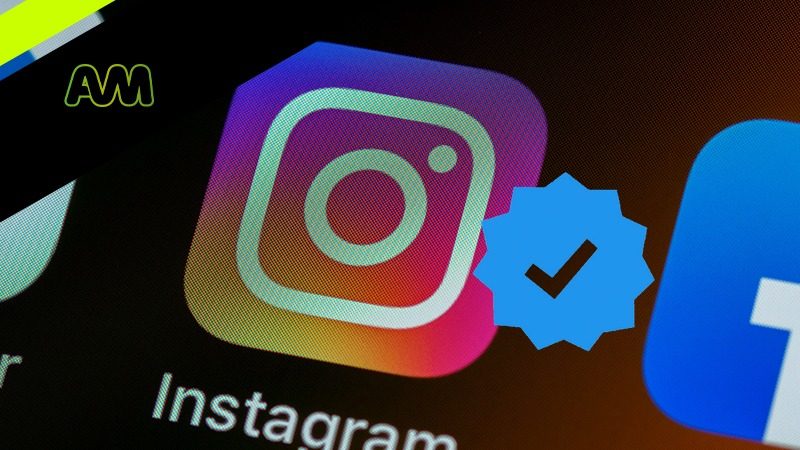
There are two ways to get a blue checkmark on Instagram in 2026, and almost every argument about verification comes from people describing different ones. One is a paid subscription that anyone with valid identification can buy. The other is the original notability route, which is still free, still open, and still difficult. Both produce the same blue tick.
This guide covers both, what each actually requires, and what the badge does and does not do once you have it.
Route one: Meta Verified, the subscription
Meta Verified is a monthly subscription. You confirm your identity with a government-issued document, and the badge follows. There is no notability test, no press coverage requirement and no follower threshold.
It starts at 14.99 US dollars a month per profile in the app, or 11.99 through a browser, with higher tiers above that. The price attaches to each profile rather than to a company, which is the detail that surprises people on their first invoice. The full pricing breakdown is here, including why the web and app prices differ and why your local figure may not match.
The trade is straightforward. It is easier to obtain, it is available to ordinary businesses and creators, and it stops the moment you stop paying.
Route two: the free notability request
The original route still exists. It costs nothing, the badge is permanent unless Instagram revokes it, and the bar is genuine public prominence.
Instagram assesses four things, and an application has to satisfy all of them:
- Authentic. A real person, registered business or entity, evidenced by official documents.
- Unique. One account per person or business. General interest accounts and fan accounts are not eligible.
- Complete. Public, with a profile photograph, a bio and at least one post.
- Notable. Well known and widely searched for, and featured in multiple independent news sources. Paid placements and promotional coverage do not count, and this is the criterion that ends most applications.
There is no follower minimum. A local business with fifty thousand followers and no press coverage will usually fail this route, while a person with far fewer followers and genuine independent coverage may pass.
How to apply
Both routes start in the app, under your account settings. The subscription is a purchase flow. The free request asks for your category, your real name, and supporting evidence of notability, which in practice means links to independent articles about you or your organisation.
Both end at the same gate: an identity check against a government document, and often a short video selfie. That step causes more failures than eligibility does, almost always because the name on the profile does not match the name on the document. What Meta accepts and what it rejects on sight is worth reading before you submit rather than after.
How long it takes
Subscription verification is usually quick once identity is confirmed, often within a day or two. The free notability request takes longer and can run to several weeks, because a person reviews it.
In both cases, resubmitting repeatedly does not accelerate anything. It resets your place and, at the identity stage, builds a pattern of failed checks against your account.
If you are rejected
A rejection is usually mechanical rather than a judgement: an unreadable document photograph, a name mismatch, an incomplete or private profile, or an unresolved policy strike. Fix the specific cause, wait the stated period, and apply once, carefully.
If the free route rejected you on notability, no amount of resubmission changes that. The constraint is coverage, not paperwork. The full recovery sequence is here.
What the badge actually does
It makes impersonation harder, which is the real product. It gives you a support channel with a human, which anyone who has lost access to a business account will value correctly. It removes ambiguity when several accounts carry variations of your name. And it answers a question for brands, banks and marketplaces checking whether you are who you say you are.
What it does not do is increase your reach. The badge is not a ranking signal for your posts, and an account that was not performing before verification is an account that is not performing after it. What the badge changes and what it does not covers this properly, because it is the single most oversold claim in the category.
What will not work
Buying it from anyone other than Meta. There is no reseller channel, no agency allocation and no partner programme, so every service offering one is running something else: taking the money, buying the ordinary subscription and marking it up, harvesting your login, or selling a fake badge that is an emoji in a display name.
Meta will never ask for your password to verify you, and no legitimate process needs a two-factor code read out to a third party. How those operations are actually structured is worth knowing, particularly if you have just been rejected, because that is exactly when the approach arrives.
Also unhelpful: bought followers and engagement. Both work against an application, since the free route is assessed by a person looking for genuine prominence, and inflated numbers are visible.
What to do instead if you cannot get it
Verification is one trust signal among several, and the others are within your control. A complete profile with a real bio and a working link. Consistent posting. Your Instagram account linked from your own website and your other channels, which is a stronger authenticity signal than most people credit. Genuine press coverage, pursued for its own sake, which happens to be the same thing the free route is looking for.
A blue tick is not the difference between a business that works on Instagram and one that does not.
Frequently asked questions
What is the Instagram blue checkmark and what does it mean?
It is a verified badge shown beside an account name on the profile and in search results, confirming the account is the authentic presence of the person, brand or creator it represents. It is not an endorsement by Instagram and it says nothing about quality. It says the account is genuine and not an impersonator.
How do you get a blue checkmark on Instagram?
Two routes. Meta Verified is a paid monthly subscription requiring a government identity document that matches your profile name. The free route is a notability-based request through account settings, requiring that your account be authentic, unique, complete and notable. In both cases the account must be public, active and free of policy violations.
Does verification increase engagement?
Not directly. The badge is not a ranking signal and it does not change how your posts are distributed. There is a modest indirect effect, in that a profile which looks legitimate converts visits to follows slightly better, but a complete bio and a coherent grid do more for that than the tick does. Anyone promising a specific percentage lift is quoting a number nobody has substantiated.
Who is eligible?
For the subscription, anyone with a valid government identity document matching their profile name, in a market where Meta Verified has launched. For the free route, public figures, notable creators, and brands with genuine independent press coverage, where impersonation is a real risk.
How much does it cost?
The free notability route costs nothing. Meta Verified starts at 14.99 US dollars a month per profile in the app, or 11.99 through a browser, with higher tiers above. Prices vary by region and are charged in local currency, so confirm the figure your own app shows. Detail here.
How long does it take after applying?
Subscription verification usually resolves within a day or two of identity confirmation. A free notability request can take several weeks. If a free application is rejected, wait the period Instagram specifies before applying again, and use the time to fix the cause rather than resubmitting the same case.