
Engineering
Tour and activity booking platform development
AVMDEVS builds tour booking platforms for operators, destination management companies and resellers in the UAE, Saudi Arabia and the wider region: the booking engine on your own site, the reseller platform your agents sell from, or the marketplace that lists other operators' inventory under your brand. Tour booking platform development is the studio's specialty. You get the booking journeys, the payments and merchant setup, the supplier and channel connections, the operations tools and the code.
We take on a limited number of platform builds at a time, and a lead who has shipped one reads every brief. An operator who only needs a widget on a brochure site is told so at the review, with a recommendation that costs less than a platform.
Scope
What you get
Fixed, written into the proposal, and the same list you will see on the invoice. Anything outside it gets quoted before it gets built.
- 01
Booking journeys
Search, availability, pricing by date and pax, options and add-ons, checkout, vouchers and confirmation, built mobile first because most Gulf travellers book on a phone.
- 02
Payments and merchant setup
Merchant-of-record or affiliate models, with Stripe, Tap, PayMob and the local gateways, Tabby and Tamara instalments, multi-currency pricing and the reconciliation that keeps finance out of the inbox.
- 03
Supplier and channel connectivity
Live availability, pricing and booking against Bókun, Ventrata (OCTO), Juniper, Viator, Rayna and hotel inventory, plus your own operated products, in one catalogue.
- 04
Vendor and agent portals
Onboard suppliers, manage their products and payouts, and give travel agents and corporate resellers their own login, rates and reporting.
- 05
Operations tools
Bookings admin, pickups and manifests, cancellations and refunds, supplier reports and the notifications that keep guests, drivers and guides on the same page.
- 06
Travel SEO
City, activity and operator pages structured to rank on Google and to be quoted by the AI assistants, in English and Arabic.
Method
How we work on this
Four steps, and what each one means for this kind of work.
Step 01
Brief: what you sell, who sells it, and where the inventory lives
You send the brief with your products, whether you operate them or resell them, the suppliers and channel managers you already use, the currencies and markets you sell in, and what a booking is worth. A current booking flow, even a broken one, tells us a lot.
Step 02
Review: a lead who has built one replies within one business day
The reply is a yes, a no with a reason, or the questions we need answered. A yes names the shape of the platform, engine, reseller platform or marketplace, the merchant model that fits your licence and cash flow, and the connections that will take the most care.
Step 03
Scope: journeys, connections, merchant model, date and price
A written scope lists every booking journey and admin screen, every supplier and channel connection with the API it uses, the payment and payout model, the languages and currencies, a fixed price and a launch date. Anything outside it is quoted before it is built.
Step 04
Build: real inventory on a staging link in the first month
The catalogue and one live supplier connection come first, so you are booking real availability on staging within weeks. Payments, portals and operations follow in order, every week visible on the link. Launch includes the migration of live bookings, redirects from the old site and search submission.
Region
Delivered in the Gulf
The specifics that decide whether a build works in the UAE and Saudi Arabia, handled as part of the scope rather than discovered after launch.
Tourism in the Gulf sells in Arabic and English to guests paying in dirhams, riyals, dollars, euros and pounds. A platform built here prices in the guest's currency, settles in yours, presents a right-to-left booking flow that mirrors properly, and sends confirmations and vouchers in the guest's language.
Payments follow the market: N-Genius, Tap or Stripe for cards, Tabby and Tamara for instalments on higher-value experiences, and Apple Pay for the guest booking from a phone at the hotel. For a UAE operator we set up VAT-correct invoicing on every booking; for a Saudi operator we keep guest data inside the Kingdom under the PDPL and issue the ZATCA-compliant e-invoices the Kingdom requires on every sale.
Distribution here runs through channel managers and OTAs as much as through your own site, which is why supplier and channel connectivity is the part of the build we spend the most care on. The two subsections below describe it.
Supplier and channel connectivity: Bókun, Ventrata and Juniper
Most operators in the region already manage availability in a reservation system, and the platform has to treat that system as the source of truth rather than a second inventory to keep in sync by hand. We connect to Bókun for operators who run their products there and sell through its marketplace, so availability, pricing and bookings flow both ways and a booking on your site blocks the seat in Bókun the moment it is paid. We connect to Ventrata through its OCTO API, the open standard for tours and activities, which gives a reseller platform live availability from every Ventrata-connected supplier and lets an operator on Ventrata sell through partners without a manual voucher. And we connect to Juniper for the travel companies and DMCs that run hotel, transfer and excursion inventory in it, so a marketplace can list packaged products alongside single activities.
Beyond the three named, the same connection layer talks to Viator and Rayna for resold inventory and to hotel and transfer suppliers on their own APIs. Each connection is written into the scope with the API it uses, what it syncs, how often, and what happens when the supplier is down: the platform degrades to a request-to-book on that product rather than showing availability it cannot confirm. Suppliers who have no API at all get a portal login and manage their own products, with the same booking rules applied.
Connectivity is also what makes the operations tools honest. Pickups, manifests and cancellations read from the same bookings the suppliers see, so a change made by a guide in Ventrata or a reseller in Bókun appears in your admin without anyone re-keying it.
Reseller and private-label platforms for operators
An operator with good products and a licence to sell has three ways to distribute them: its own booking engine, the OTAs, and a reseller network of hotels, concierges, corporate buyers and travel agents who book on the operator's behalf. The third is where a private-label platform earns its cost. We build reseller platforms that give each partner its own login, its own net rates and commission, its own vouchers and, where the partner wants it, a booking page under its own brand and domain that sells your inventory as if it were theirs.
The same platform serves a DMC or a marketplace operator in reverse: onboard suppliers through a portal, take a commission or act as merchant of record, pay out on a schedule, and present the whole catalogue under one brand with one checkout. Payouts, commission statements and supplier reports are generated by the platform, not assembled in a spreadsheet at month end.
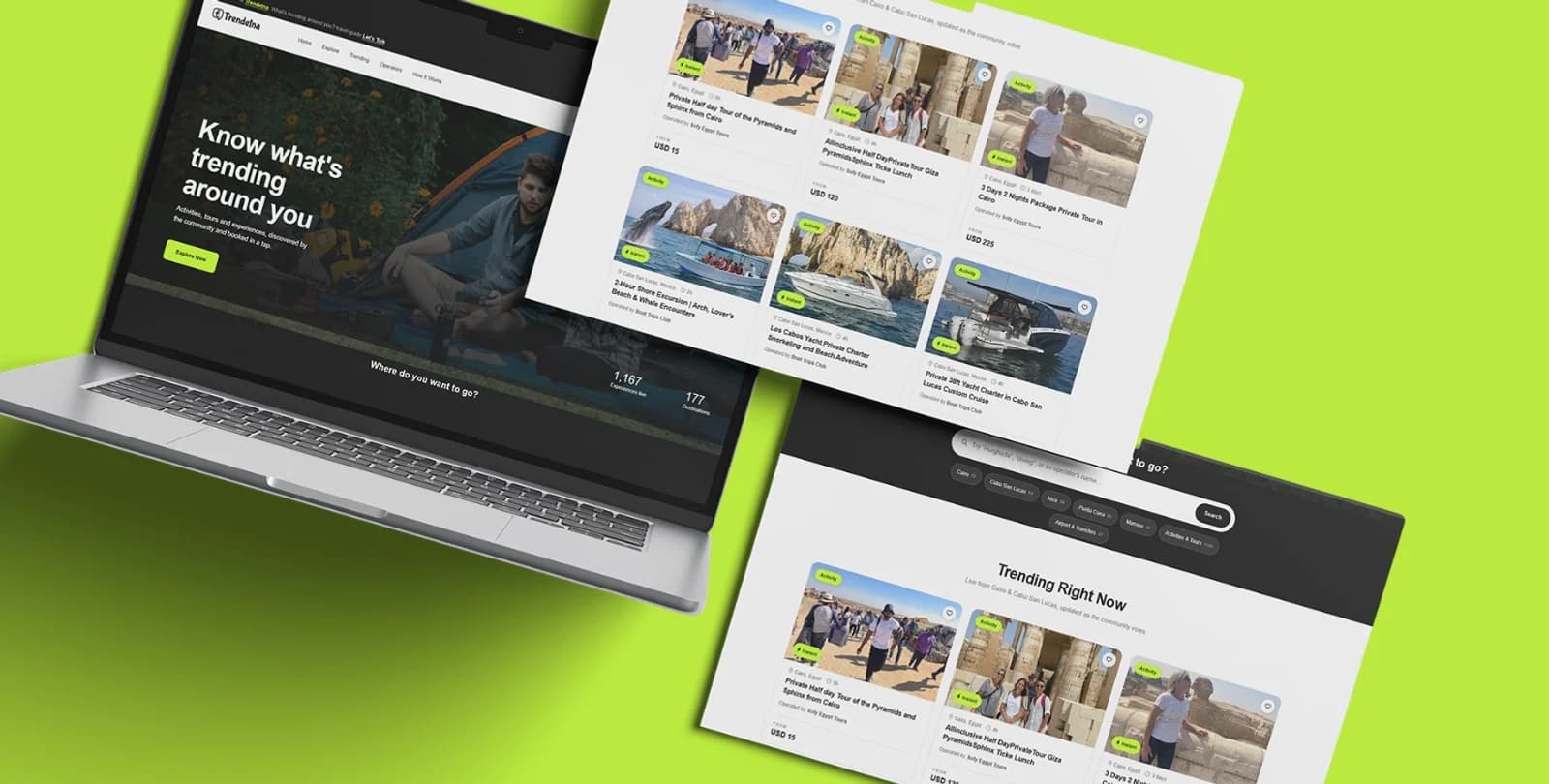
Trendetna, the travel product AVMDEVS owns, runs on this architecture: a Next.js front end over a Go backend, holding live conversations with operator inventory, Stripe, currency, mapping and mail. Building and running a product of our own is why the connections on a client platform are the part we get right first.
Investment
Pricing
Indicative ranges for accepted projects. Every quote is written against the scope agreed at the review.
A booking platform is priced against the written scope: the journeys, the supplier and channel connections, the merchant and payout model, the portals and the languages. Accepted projects in this category usually start around $3,500. See ranges →
Proof
Related work
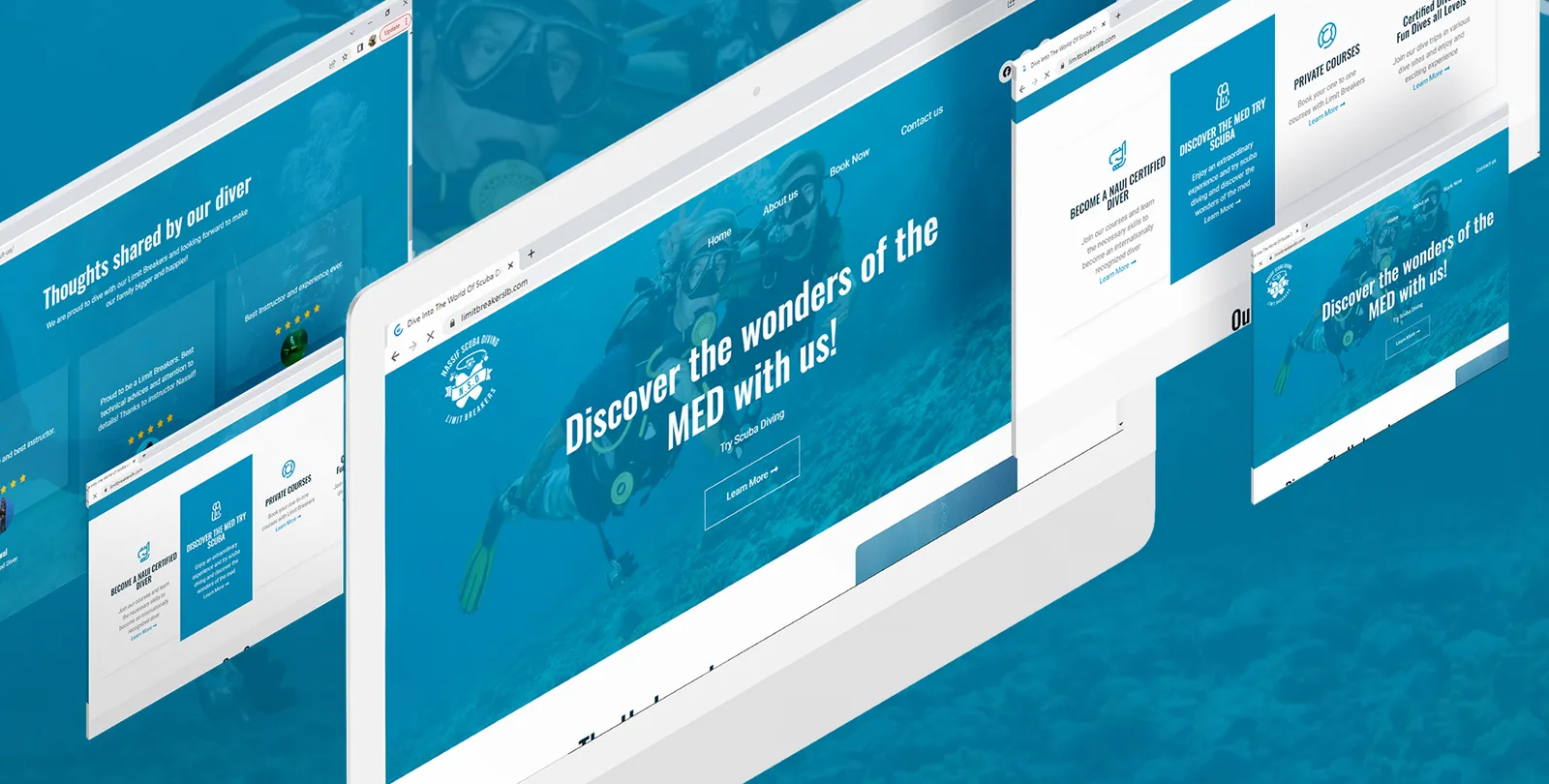
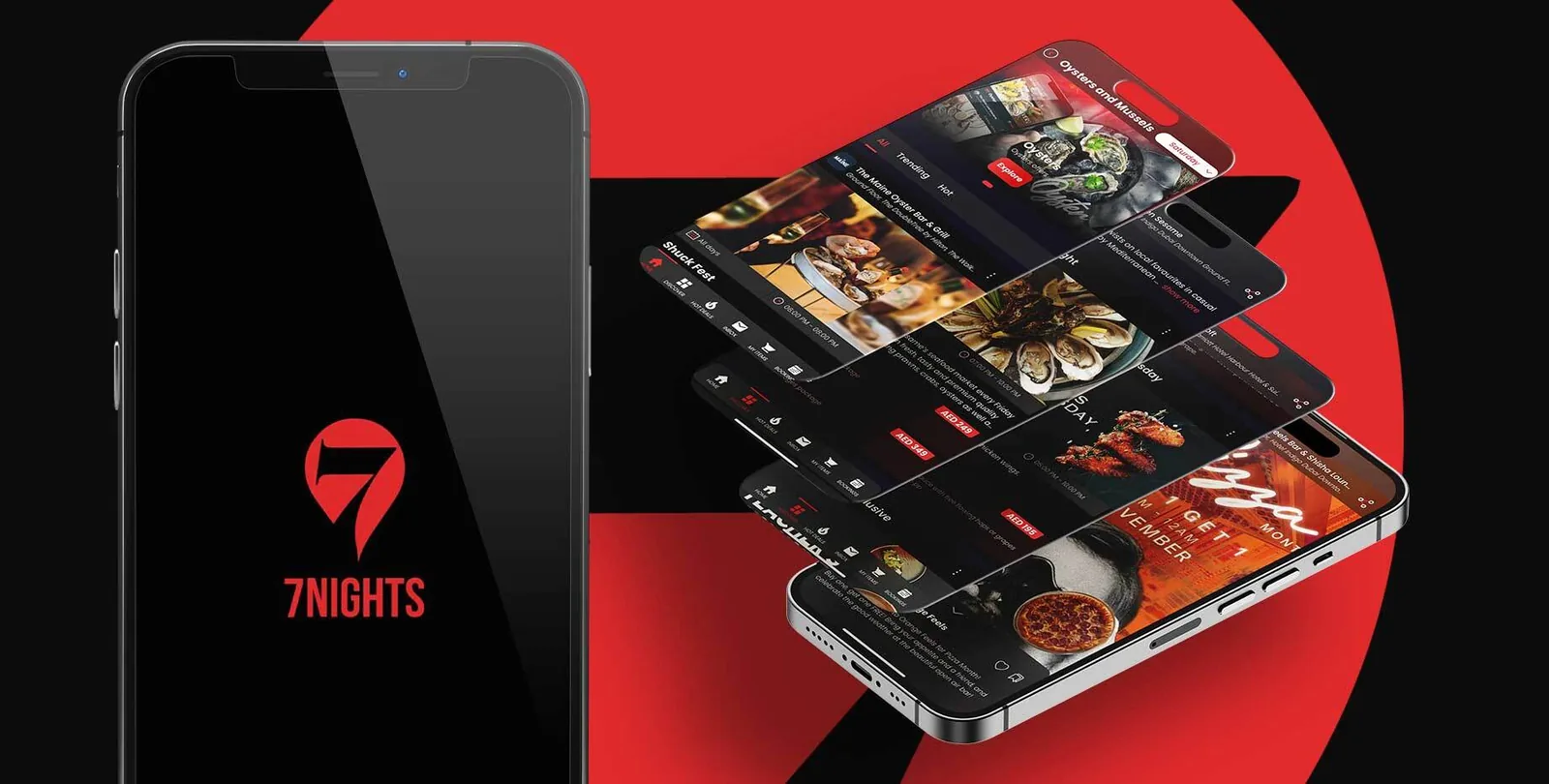
Cases from the public part of the record in this discipline. Open any of them for the brief, the build and the screens.
Reading
Further reading
What we have already written on this, and where the rest of the answer lives on this site.
Answers
Tourism & Booking Platforms questions
The things clients ask before they sign. If yours is not here, ask us directly.
Do you take every project?
No. A booking platform is a serious build, and a lead who has shipped one reads every brief. An operator who only needs a booking widget on a brochure site, a marketplace with no inventory to list, or a budget that cannot cover proper supplier connections is told so at the review, usually with a cheaper recommendation that fits.
Who owns the code?
You do, entirely. The platform, its repositories, the supplier connection layer, the merchant accounts and the data are yours from the start or handed over at launch with documentation for whoever runs it after us. AVMDEVS keeps no licence and no lock-in on anything built for a client.
Can the platform connect to the reservation system we already use?
Almost certainly. We connect to Bókun, Ventrata through OCTO, Juniper, Viator and Rayna, and to hotel and transfer suppliers on their own APIs. Your system stays the source of truth for availability and pricing; the platform reads from it and writes bookings back. A supplier with no API gets a portal login instead. Every connection is named in the scope.
Should we be merchant of record or run an affiliate model?
It depends on your licence, your cash flow and your suppliers. Merchant of record gives you the checkout, the guest data and the margin, and makes you responsible for refunds and VAT. An affiliate or agency model sends payment to the supplier and pays you a commission, with less liability and less control. We set out both at the review and the platform supports either.
How long does a booking platform take to build?
A booking engine on your own site with one or two supplier connections usually takes three to four months. A reseller platform or a marketplace with vendor onboarding, payouts and several connections runs five to eight. Real inventory is bookable on a staging link within the first month, so progress is something you can test, not a promise.
Do you build the mobile app as well?
Yes, when the business case is there: a guest app for bookings and vouchers, a guide or driver app for manifests and pickups, or a reseller app for partners in the field. The apps run on the same backend as the platform, built by the same team, so nothing has to be integrated after the fact.
Next
Works well with
Most engagements combine two or three of these. They are built by the same team, so nothing has to be integrated after the fact.
- Mobile App DevelopmentWe build native-grade iOS and Android apps from first scope to a live release, with the backend, analytics, and release pipeline to match.
- Custom Web DevelopmentCustom websites, portals and platforms engineered from scratch: Next.js on the front, Node.js or Go on the back, PostgreSQL underneath.
- Online StoresAn online store on Shopify, WooCommerce, Zid or Salla, with products, payments and shipping set up, tested and ready to take orders.
Submit a brief.
A lead reads every brief and replies within one business day with a yes, a no, or the questions we need answered before we can say.
Already delivered: Reseller platform live on Bokun with 1,400+ syndicated listings and operator pages.
Typical range for an accepted project in this category starts around $3,500. See ranges