
Engineering
E-commerce development company in Dubai for Shopify, Salla and Zid stores that take orders on day one
AVMDEVS is an e-commerce development company in Dubai for brands that need a store working in the UAE and Saudi Arabia, not a theme with the logo swapped. You get the store on Shopify, Salla, Zid or WooCommerce, designed on your brand, loaded with your products, wired to the payment and delivery rails buyers here use, in Arabic and English, and tested with real orders before it goes live.
We take on a limited number of store builds at a time. Every brief is read by a lead, and a store that a standard theme would serve well is told so at the review rather than sold a custom build it does not need.
Scope
What you get
Fixed, written into the proposal, and the same list you will see on the invoice. Anything outside it gets quoted before it gets built.
- 01
Store setup on the right platform
Shopify for brands selling across the region and abroad, Salla or Zid for stores whose market is Saudi Arabia, WooCommerce where the business already runs on WordPress. The choice is made in the review and written into the scope with the reason.
- 02
Design on your brand
A storefront that looks like your brand and is easy to buy from on a phone, in a right-to-left layout that mirrors properly for Arabic.
- 03
Products loaded
Your catalogue, variants, photos and descriptions loaded and structured, with Arabic and English product content where the market needs both.
- 04
Payments and instalments
N-Genius, Tap, PayMob or Stripe for cards, Tabby and Tamara for instalments, Apple Pay, and cash on delivery where the market still expects it.
- 05
Delivery and fulfilment
Delivery zones and rates by emirate or region, a courier or 3PL connection so orders flow without re-keying, and the returns flow the platform supports.
- 06
Test and launch
Test orders on every payment method and delivery option, redirects from the old store, search submission, and a first month of watching real orders come in.
Method
How we work on this
Four steps, and what each one means for this kind of work.
Step 01
Brief: what you sell, where, and what already exists
You send the brief with the products, the markets and languages, the platform you are on if there is one, the payment and courier accounts you hold, and what an order is worth. A link to the current store, however rough, tells us most of what we need.
Step 02
Review: platform and payments decided before the quote
A lead replies within one business day with a yes, a no with a reason, or the questions we need answered. A yes names the platform and why, the payment and instalment providers that fit your licence and market, and the delivery setup the catalogue needs.
Step 03
Scope: pages, products, rails, date and price
A written scope lists the storefront pages and templates, the product load, the payment, instalment and delivery connections, the languages, the migration from the old store, a fixed price and a launch date. Anything outside it is quoted before it is built.
Step 04
Build: a staging store with real products in the first two weeks
You are placing test orders on staging early, with your own products and your own payment accounts in test mode. Every payment method and delivery option is tested with a real order before launch, and the first month after launch is watched by the people who built it.
Region
Delivered in the Gulf
The specifics that decide whether a build works in the UAE and Saudi Arabia, handled as part of the scope rather than discovered after launch.
A store for the Gulf sells in Arabic and English, and the Arabic version has to be a real storefront: right-to-left layout, Arabic product content, Arabic checkout and confirmation mails, not a machine translation switched on in the theme. On Shopify that means the markets and translation setup done properly; on Salla and Zid it is native, and we work inside each platform's limits rather than around them.
Payments follow the market. In the UAE, N-Genius, Tap or Stripe for cards and Tabby and Tamara for instalments cover most buyers; cash on delivery still matters for some categories and is set up with the courier. In Saudi Arabia, Mada cards and Apple Pay are the first two methods a store needs, Tabby and Tamara follow, and a Salla or Zid store gets them through the platform's own gateway setup.
Compliance is part of the scope: VAT-correct invoices for a UAE store, ZATCA-compliant e-invoicing for a Saudi one, and customer data kept under the PDPL. Delivery is set up by emirate or region with the courier or 3PL you already use, so an order placed at midnight is with the courier in the morning without anyone copying it across.
Investment
Pricing
Indicative ranges for accepted projects. Every quote is written against the scope agreed at the review.
A store is priced against the written scope: the platform, the number of products and templates, the languages, the payment and delivery connections, and the migration from an old store. Accepted projects in this category usually start around $1,200. See ranges →
Proof
Related work
Cases from the public part of the record in this discipline. Open any of them for the brief, the build and the screens.


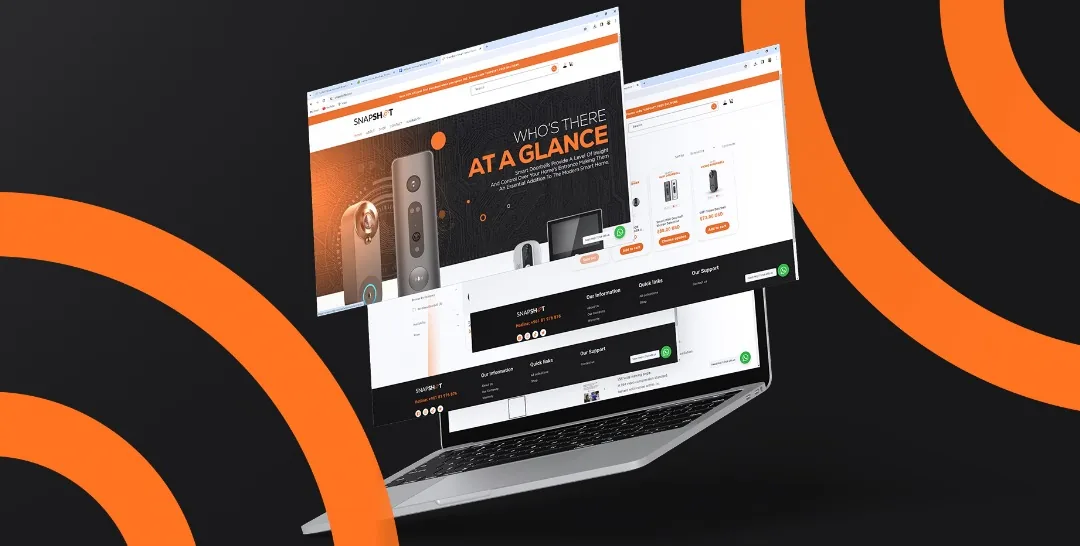
Reading
Further reading
What we have already written on this, and where the rest of the answer lives on this site.
Answers
Online Stores questions
The things clients ask before they sign. If yours is not here, ask us directly.
Do you take every project?
No. A lead reads every brief and we accept the stores we can do well with the people we have. A store a standard theme would serve, a catalogue with no product content ready, or a budget that cannot cover proper payment and delivery connections gets an honest no at the review, usually with a cheaper route that fits.
Who owns the code?
You do. The store account, the theme code, the product data, the payment and courier accounts and the domain are in your name from the start or handed over at launch, with documentation for whoever runs the store after us. AVMDEVS keeps no licence, no lock-in and no right to the store.
Shopify, Salla, Zid or WooCommerce: which should we use?
Shopify suits a brand selling across the GCC and abroad that wants the largest app ecosystem. Salla and Zid suit a store whose market is Saudi Arabia, with Mada, Arabic and local couriers native. WooCommerce fits a business already on WordPress with a small catalogue. We make the call in the review and write the reason into the scope.
Which payment methods should a Gulf store offer?
Cards through N-Genius, Tap, PayMob or Stripe; Mada in Saudi Arabia; Apple Pay; Tabby and Tamara instalments, which lift conversion on higher-value baskets; and cash on delivery where the category still expects it. The right set depends on your market and licence, and every one in the scope is tested with a real order before launch.
Can you migrate our store without losing orders or rankings?
Yes. Products, customers and order history are migrated and checked, every old URL that earns traffic gets a redirect, and the switch is scheduled for a quiet hour with the old store kept ready to fall back to. Rankings dip briefly during any migration; a careless one loses them, which the redirect map exists to prevent.
Do you handle the store after launch?
Most stores move to a care retainer: platform and app updates, monitoring, product and content changes from your monthly hours, and a fast response if checkout breaks. It is optional. The store works without it; the retainer means you are never the one debugging it during a sale.
Next
Works well with
Most engagements combine two or three of these. They are built by the same team, so nothing has to be integrated after the fact.
- Website DevelopmentWe design and build custom websites and web apps that load fast, rank well, and convert.
- SEO ServicesWe improve your search rankings with technical SEO, keyword strategy, content, and link building, measured on the traffic and leads it actually drives.
- Website CareWe keep your website secure, backed up and up to date, with hours every month for the changes you need.
Submit a brief.
A lead reads every brief and replies within one business day with a yes, a no, or the questions we need answered before we can say.
Already delivered: UAE home goods store launched on Shopify with Product, Offer, shipping and returns schema passing Merchant Center.
Typical range for an accepted project in this category starts around $1,200. See ranges